In this guide
Identify the route before preparing
The official MTA exam overview explains that some roles use examinations, with some processes limited to eligible current employees and others open to the public. That establishes a distinction, not a universal rule for every MTA job. Before collecting study material, identify the actual title, exam number, agency and Notice of Examination. A regular vacancy posting and an examination notice should not be merged just because their titles resemble each other.
This guide is an independent document-reading method. It does not assess eligibility, offer test answers or promise selection. The official exam page was marked updated February 6, 2025 when checked on October 1, 2026. Individual notices and later updates have their own dates. A current search result can point to an old document, so the date printed within the notice matters more than a search engine's recent crawl label.
Build a four-part notice card
The first part is identity: title, exam number, agency and revision. The second is audience: who the notice says may apply and any stated conditions. The third is time: application opening and closing, anticipated assessment information and any later update. The fourth is action: required materials, fees or waiver instructions where applicable, and the official submission route. Keep these parts distinct so a change in one does not silently rewrite the others.
A hypothetical notice might be open for applications this month while testing is expected later. The application window is the immediate action boundary; the test date is a separate planning reference. If the assessment date changes, it does not automatically reopen applications. If another exam has a different window, its dates do not extend this one. This sounds simple, but separating the labels prevents consequential calendar mistakes.
Read eligibility as written
A promotion notice may name specific eligible titles or status conditions. Do not reduce that wording to “employees can apply.” Likewise, a public-facing overview cannot decide whether a particular applicant's credential or experience satisfies a notice. Build a private evidence list tied to each stated condition, and mark unclear terms for an official question. Keep identity documents and personnel records out of informal research notes and public correspondence.
For example, imagine that an applicant has relevant maintenance experience but the notice describes a particular current title. The useful question concerns the notice's title requirement, not whether the person's experience sounds comparable in ordinary language. Experience can be valuable while the route remains unavailable or uncertain. This publication cannot resolve that distinction; recognizing it early helps avoid preparing for a process on a false premise.
Treat every stage as a separate state
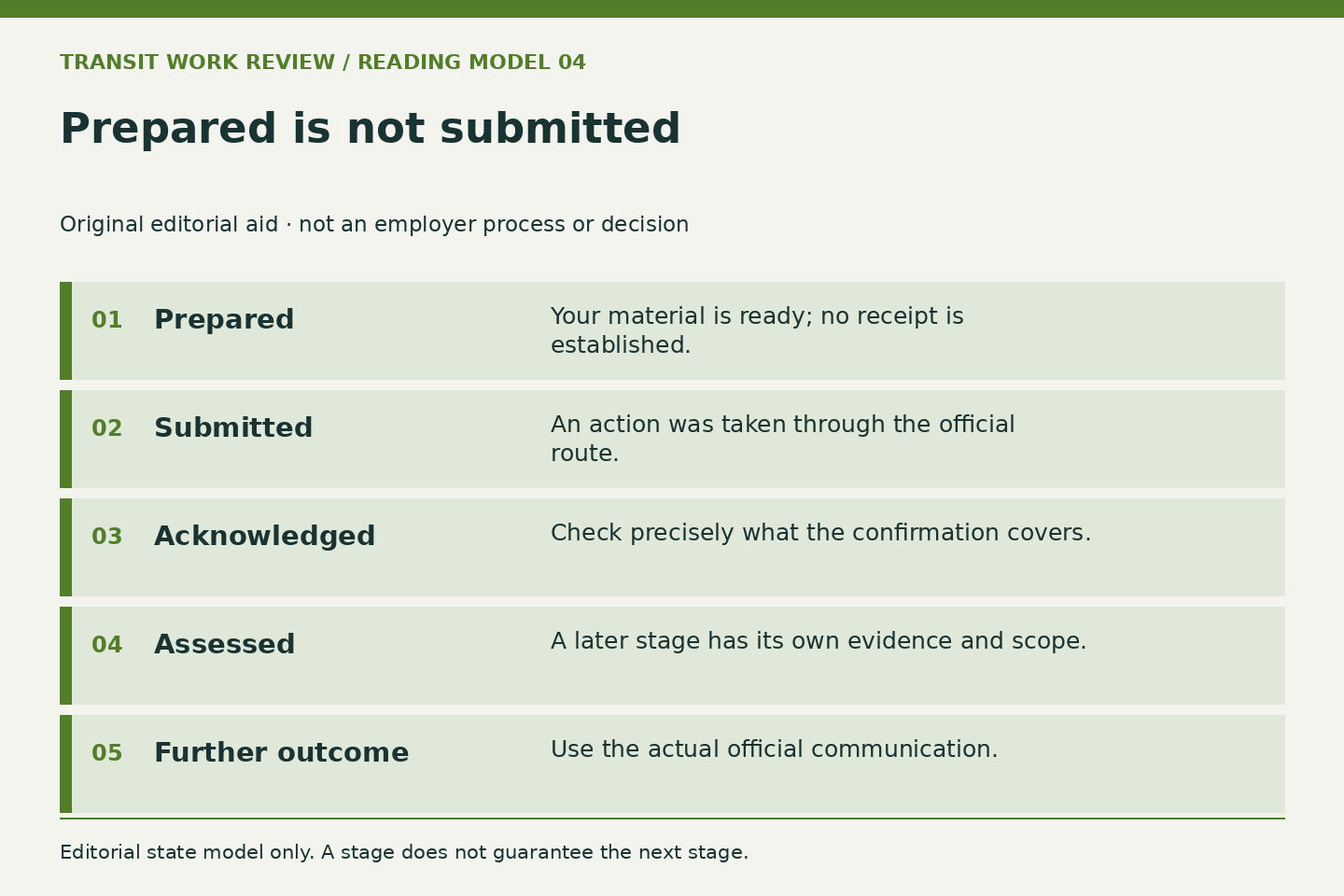
Our editorial state model is prepared, submitted, acknowledged, assessed and informed of a later outcome. These are descriptions of evidence a person might hold, not the MTA's official status labels. The distinction helps with personal organization. An application drafted on a device is not a submission. A payment event alone may not prove that every part of an application was completed. A study plan says nothing about eligibility.
After an official action, preserve the confirmation supplied by that process in an appropriate private location. Record what it confirms and what it does not. If the evidence is unclear, use the current official contact instructions. Do not repeat transactions simply because an independent article suggests a generic fix. A duplicate submission or payment can introduce another issue without resolving the first, and this website cannot inspect the underlying account.
Understand the difference between a list and an offer
The official overview describes later hiring-list stages. Readers should keep assessment results, list information, invitations and an employment offer conceptually separate. A favorable result at one stage does not establish the terms or timing of another. Avoid building personal plans around an assumed start date that no official communication has supplied. A general process estimate is not a promise to an individual applicant.
A worked planning example can be modest: a reader has received an official update but no request for another action. Their private note should record the communication date, the stated next step, the route for updates and any explicit deadline. It should not invent weekly follow-up obligations, assume a specific rank outcome, or treat silence as a decision. When action is needed, the current notice and official communication are the relevant sources.
Review changes without losing the original context
Keep a short change log containing only public document references and your own administrative checklist. If a revision appears, compare the title and exam identifier before noting the changed field. Preserve the revision date and reread surrounding conditions. A new sentence can change how an earlier requirement is understood; copying a single line without context is risky.
The result of careful reading is a smaller, clearer set of tasks: verify the right notice, establish whether a condition needs clarification, prepare the requested material and follow the current official instructions. No independent guide can guarantee an application, assessment or appointment outcome. It can help a reader avoid confusing documents and stages, which is often the most useful preparation before subject-specific study begins.
Try the Responsibility Bench to prepare a bounded question.
Continue reading: My MTA Portal: the public workforce context, Make maintenance experience explainable, Build a small proof index for your application.